This class is only used to test formatting. More...
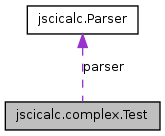
Classes | |
| class | Pair |
| Local class used by parseGeneral(). More... | |
Static Public Member Functions | |
| static void | main (String[] args) |
| Call this function to process a test file. | |
| static Pair | parseStandard (String s, int radix, int e) |
| Parses an integer. | |
| static Pair | parseGeneral (String s, int radix, int radix2) |
| Parses a number. | |
Static Package Attributes | |
| static final double | DBL_EPSILON = 2.2204460492503131e-16 |
| Used for relative errors. | |
Static Private Member Functions | |
| static Object | parse (String expressionString, Base b) |
| Used to try to create a Complex from a String expression. | |
| static Object | parse2 (String expressionString, Base b) |
| Used to try to create a Complex from a String expression. | |
| static boolean | checkNumber (String expression, Complex z, Notation n, Base base) |
| Compare expression and result strings. | |
| static int | sigDigits (String number) |
| Find the number of significant digits in the number. | |
| static int | getRadix (Base b) |
| Used to convert Base to corresponding int. | |
| static int | getRadix2 (Base b) |
| Used to convert Base to corresponding int. | |
| static boolean | compare (double number, double rounded, double absolute, int sigDigits, int base) |
| The main comparison function. | |
| static boolean | testRelative (double result, double expected, double relative_error) |
| Test if result matches expected accurately. | |
Static Private Attributes | |
| static final java.util.EnumSet < Base > | bases = java.util.EnumSet.of( Base.BINARY, Base.OCTAL, Base.DECIMAL, Base.HEXADECIMAL ) |
| Not used. | |
| static final double | e = Math.exp( 1 ) |
| The number e. | |
| static final double | p = 1.0 / 180 |
| Could be used for angles. | |
| static Parser | parser = new Parser() |
| A Parser. | |
| static final java.util.regex.Pattern | plus = java.util.regex.Pattern.compile( "^\\+" ) |
| Leading plus sign. | |
| static final java.util.regex.Pattern | plus2 = java.util.regex.Pattern.compile( "\\+$" ) |
| Trailing plus sign. | |
| static final java.util.regex.Pattern | minus = java.util.regex.Pattern.compile( "−" ) |
| HTML minus sign. | |
| static final java.util.regex.Pattern | minus2 = java.util.regex.Pattern.compile( "-" ) |
| Java minus sign. | |
| static final java.util.regex.Pattern | empty = java.util.regex.Pattern.compile( "" ) |
| Nothing. | |
| static final java.util.regex.Pattern | J = java.util.regex.Pattern.compile( "i" ) |
| The number i. | |
| static final java.util.regex.Pattern | html = java.util.regex.Pattern.compile( "</?html>" ) |
| Start or end html. | |
| static final java.util.regex.Pattern | esymbol = java.util.regex.Pattern.compile( "e<sup>" ) |
| Polar representation start of exponent. | |
| static final java.util.regex.Pattern | decexp = java.util.regex.Pattern.compile( "<sup>" ) |
| Scientific representation start of exponent. | |
| static final java.util.regex.Pattern | sup = java.util.regex.Pattern.compile( "</sup>" ) |
| End of exponent. | |
| static final java.util.regex.Pattern | dec = java.util.regex.Pattern.compile( "[+-]?[0-9A-F]*\\.?[0-9A-F]*(e[+-]?[0-9A-F]+)?" ) |
| A number (originally decimal but now any). | |
| static final java.util.regex.Pattern | deci |
| A number (originally decimal but now any) follwoed by i. | |
| static final java.util.regex.Pattern | begin = java.util.regex.Pattern.compile( "[+-]?0?\\.0*" ) |
| Start of number smaller than 1 in size. | |
| static final java.util.regex.Pattern | end = java.util.regex.Pattern.compile( "e[+-]?[0-9A-F]+" ) |
| End of number. | |
| static final java.util.regex.Pattern | trailingzero = java.util.regex.Pattern.compile( "0*$" ) |
| Trailing zero. | |
| static final java.util.regex.Pattern | digit = java.util.regex.Pattern.compile( "[0-9A-F]" ) |
| Any digit. | |
| static final java.util.regex.Pattern | octothorp = java.util.regex.Pattern.compile( "^#" ) |
| Octothorp (hash): used for comments. | |
| static final java.util.regex.Pattern | calc = java.util.regex.Pattern.compile( "^.*, " ) |
| Used to identify if there is more than one expression on a line. | |
| static final java.util.regex.Pattern | comma = java.util.regex.Pattern.compile( ", $" ) |
| Used to identify comma. | |
| static final java.util.regex.Pattern | overflow = java.util.regex.Pattern.compile( "^overflow$" ) |
| Used to identify overflow (from Parser). | |
| static final java.util.regex.Pattern | basepoint = java.util.regex.Pattern.compile( "\\." ) |
| The base point. | |
| static final java.util.regex.Pattern | esymbol2 = java.util.regex.Pattern.compile( "e" ) |
| The exponent symbol e. | |
| static final java.util.regex.Pattern | exponent2 = java.util.regex.Pattern.compile( "e[+-]?[0-9A-F]+" ) |
| An exponent. | |
| static final java.util.regex.Pattern | hex = java.util.regex.Pattern.compile( "^Hex " ) |
| Start of hexadecimal expression. | |
| static final java.util.regex.Pattern | bin = java.util.regex.Pattern.compile( "^Bin " ) |
| Start of binary expression. | |
| static final java.util.regex.Pattern | oct = java.util.regex.Pattern.compile( "^Oct " ) |
| Start of octal expression. | |
| static AngleType | angleType |
| AngleType. | |
Detailed Description
This class is only used to test formatting.
- Version:
- Revision:
- 1.8
Member Function Documentation
| static boolean jscicalc.complex.Test.checkNumber | ( | String | expression, | |
| Complex | z, | |||
| Notation | n, | |||
| Base | base | |||
| ) | [static, private] |
Compare expression and result strings.
This is done in two phases. First, the expression is compared with an internal representation to make sure that the calculator is storing the value accurately. Second the expression is compared with a calculator output to make sure that the output matches the input.
- Parameters:
-
expression the expression string z The input result n The Notation base The Base
- Returns:
- true or false according as the expression matches internal representation and result.
References jscicalc.complex.Complex.abs(), jscicalc.complex.Complex.arg(), jscicalc.complex.Test.compare(), jscicalc.Notation.complex(), jscicalc.complex.Test.dec, jscicalc.complex.Test.decexp, jscicalc.complex.Test.deci, jscicalc.complex.Test.empty, jscicalc.complex.Test.esymbol, jscicalc.complex.Test.getRadix(), jscicalc.complex.Test.getRadix2(), jscicalc.complex.Test.html, jscicalc.complex.Complex.imaginary(), jscicalc.complex.Test.J, jscicalc.complex.Test.minus, jscicalc.complex.Test.minus2, jscicalc.Notation.nonComplex(), jscicalc.complex.Test.overflow, jscicalc.complex.Test.p, jscicalc.complex.Test.parseGeneral(), jscicalc.complex.Test.plus, jscicalc.complex.Test.plus2, jscicalc.Notation.polar(), jscicalc.complex.Complex.real(), jscicalc.Notation.rectangular(), jscicalc.complex.Test.sigDigits(), jscicalc.Notation.standard(), jscicalc.complex.Test.sup, jscicalc.OObject.toHTMLString(), and jscicalc.complex.Test.Pair.value.
Referenced by jscicalc.complex.Test.main().
| static boolean jscicalc.complex.Test.compare | ( | double | number, | |
| double | rounded, | |||
| double | absolute, | |||
| int | sigDigits, | |||
| int | base | |||
| ) | [static, private] |
The main comparison function.
This compares a number with an approximation to it. The comparison considers numbers to sigDigits significat digits in the approximation, but also allows the absolute difference between two numbers to be considered and if the difference exceeds absolute, the numbers are considered the same.
- Parameters:
-
number The number rounded An approximation to the number absolute The allowable absolute difference between the number and approximation. sigDigits The number of digits that should match base The base: 2, 8, 10 or 16
- Returns:
- true or false according as the numbers match or not
Referenced by jscicalc.complex.Test.checkNumber().
| static int jscicalc.complex.Test.getRadix | ( | Base | b | ) | [static, private] |
Used to convert Base to corresponding int.
- Parameters:
-
b A Base
- Returns:
- The base as an integer: 2, 8, 10 or 16.
Referenced by jscicalc.complex.Test.checkNumber(), and jscicalc.complex.Test.getRadix2().
| static int jscicalc.complex.Test.getRadix2 | ( | Base | b | ) | [static, private] |
Used to convert Base to corresponding int.
Differs from getRadix() by returning 10 if b is Base.Binary. Hence appropriate for evaluating output strings.
- Parameters:
-
b A Base
- Returns:
- The base as an integer: 8, 10 or 16.
References jscicalc.complex.Test.getRadix().
Referenced by jscicalc.complex.Test.checkNumber().
| static void jscicalc.complex.Test.main | ( | String[] | args | ) | [static] |
Call this function to process a test file.
The file should be called test.jsc, located in the build directory and the function called as java jscicalc/complex/Test. The function reads a number of numbers, together with a base, denoted Bin, Oct, Hex or nothing for binary, octal, hexadecimal or decimal formats. All eight possible combinations of notation are tested for the number and for each both input/internal and input/output checks are done.
- Parameters:
-
args Standard argument: not used
References jscicalc.complex.Complex.abs(), jscicalc.complex.Test.angleType, jscicalc.complex.Test.bin, jscicalc.complex.Test.calc, jscicalc.complex.Test.checkNumber(), jscicalc.complex.Test.comma, jscicalc.complex.Test.DBL_EPSILON, jscicalc.complex.Test.e, jscicalc.complex.Test.hex, jscicalc.complex.Complex.imaginary(), jscicalc.complex.Test.oct, jscicalc.complex.Test.octothorp, jscicalc.complex.Test.parse(), jscicalc.complex.Test.parse2(), jscicalc.complex.Complex.real(), jscicalc.Notation.setComplex(), jscicalc.Notation.setNonComplex(), jscicalc.Notation.setPolar(), jscicalc.Notation.setRectangular(), jscicalc.Notation.setScientific(), jscicalc.Notation.setStandard(), and jscicalc.complex.Test.testRelative().
| static Object jscicalc.complex.Test.parse | ( | String | expressionString, | |
| Base | b | |||
| ) | [static, private] |
Used to try to create a Complex from a String expression.
Used internally. A base is needed to be sure the expression is interpreted correctly.
- Parameters:
-
expressionString The expression b The Base
- Returns:
- An Object, hopefully a Complex
References jscicalc.Parser.add(), jscicalc.complex.Test.angleType, jscicalc.Parser.base, jscicalc.Parser.clearExpression(), jscicalc.Parser.evaluate(), and jscicalc.complex.Test.parser.
Referenced by jscicalc.complex.Test.main().
| static Object jscicalc.complex.Test.parse2 | ( | String | expressionString, | |
| Base | b | |||
| ) | [static, private] |
Used to try to create a Complex from a String expression.
Used internally. A base is needed to be sure the expression is interpreted correctly.
- Parameters:
-
expressionString The expression b The Base
- Returns:
- An Object, hopefully a Complex
References jscicalc.Parser.add(), jscicalc.complex.Test.angleType, jscicalc.Parser.base, jscicalc.Parser.clearExpression(), jscicalc.Parser.evaluate(), and jscicalc.complex.Test.parser.
Referenced by jscicalc.complex.Test.main().
| static Pair jscicalc.complex.Test.parseGeneral | ( | String | s, | |
| int | radix, | |||
| int | radix2 | |||
| ) | [static] |
Parses a number.
The base to use is given by radix.
- Parameters:
-
s The integer as a string radix Used for the base radix2 Used for the base
- Returns:
- A number and its number of significant digits
References jscicalc.complex.Test.e, jscicalc.complex.Test.empty, jscicalc.complex.Test.esymbol2, jscicalc.complex.Test.exponent2, jscicalc.complex.Test.minus2, jscicalc.complex.Test.parseStandard(), and jscicalc.complex.Test.plus.
Referenced by jscicalc.complex.Test.checkNumber().
| static Pair jscicalc.complex.Test.parseStandard | ( | String | s, | |
| int | radix, | |||
| int | e | |||
| ) | [static] |
Parses an integer.
The base to use is given by radix and e is used to handle exponents.
- Parameters:
-
s The integer as a string radix Used for the base e Used for exponent
- Returns:
- A number and its number of significant digits
- See also:
- parseGeneral()
References jscicalc.complex.Test.basepoint.
Referenced by jscicalc.complex.Test.parseGeneral().
| static int jscicalc.complex.Test.sigDigits | ( | String | number | ) | [static, private] |
Find the number of significant digits in the number.
- Parameters:
-
number A string representation (including e )
- Returns:
- The number of significant digits
References jscicalc.complex.Test.begin, jscicalc.complex.Test.digit, jscicalc.complex.Test.end, and jscicalc.complex.Test.trailingzero.
Referenced by jscicalc.complex.Test.checkNumber().
| static boolean jscicalc.complex.Test.testRelative | ( | double | result, | |
| double | expected, | |||
| double | relative_error | |||
| ) | [static, private] |
Test if result matches expected accurately.
Based on functions in the GNU scientific library.
- Parameters:
-
result The result of a calculation expected The expected result relative_error The relative error in the calculation
- Returns:
- true or false according as result matches expected
Referenced by jscicalc.complex.Test.main().
Member Data Documentation
AngleType jscicalc.complex.Test.angleType [static, private] |
AngleType.
Referenced by jscicalc.complex.Test.main(), jscicalc.complex.Test.parse(), and jscicalc.complex.Test.parse2().
final java.util.regex.Pattern jscicalc.complex.Test.basepoint = java.util.regex.Pattern.compile( "\\." ) [static, private] |
The base point.
Referenced by jscicalc.complex.Test.parseStandard().
final java.util.EnumSet<Base> jscicalc.complex.Test.bases = java.util.EnumSet.of( Base.BINARY, Base.OCTAL, Base.DECIMAL, Base.HEXADECIMAL ) [static, private] |
Not used.
final java.util.regex.Pattern jscicalc.complex.Test.begin = java.util.regex.Pattern.compile( "[+-]?0?\\.0*" ) [static, private] |
Start of number smaller than 1 in size.
Referenced by jscicalc.complex.Test.sigDigits().
final java.util.regex.Pattern jscicalc.complex.Test.bin = java.util.regex.Pattern.compile( "^Bin " ) [static, private] |
Start of binary expression.
Referenced by jscicalc.complex.Test.main().
final java.util.regex.Pattern jscicalc.complex.Test.calc = java.util.regex.Pattern.compile( "^.*, " ) [static, private] |
Used to identify if there is more than one expression on a line.
Referenced by jscicalc.complex.Test.main().
final java.util.regex.Pattern jscicalc.complex.Test.comma = java.util.regex.Pattern.compile( ", $" ) [static, private] |
Used to identify comma.
Referenced by jscicalc.complex.Test.main().
final double jscicalc.complex.Test.DBL_EPSILON = 2.2204460492503131e-16 [static, package] |
Used for relative errors.
Referenced by jscicalc.complex.Test.main().
final java.util.regex.Pattern jscicalc.complex.Test.dec = java.util.regex.Pattern.compile( "[+-]?[0-9A-F]*\\.?[0-9A-F]*(e[+-]?[0-9A-F]+)?" ) [static, private] |
A number (originally decimal but now any).
Referenced by jscicalc.complex.Test.checkNumber().
final java.util.regex.Pattern jscicalc.complex.Test.decexp = java.util.regex.Pattern.compile( "<sup>" ) [static, private] |
Scientific representation start of exponent.
Referenced by jscicalc.complex.Test.checkNumber().
final java.util.regex.Pattern jscicalc.complex.Test.deci [static, private] |
 java.util.regex.Pattern
    .compile( "[+-]?[0-9A-F]*\\.?[0-9A-F]*(e[+-]?[0-9A-F]+)?i" )
A number (originally decimal but now any) follwoed by i.
Referenced by jscicalc.complex.Test.checkNumber().
final java.util.regex.Pattern jscicalc.complex.Test.digit = java.util.regex.Pattern.compile( "[0-9A-F]" ) [static, private] |
Any digit.
Referenced by jscicalc.complex.Test.sigDigits().
final double jscicalc.complex.Test.e = Math.exp( 1 ) [static, private] |
The number e.
Referenced by jscicalc.complex.Test.main(), and jscicalc.complex.Test.parseGeneral().
final java.util.regex.Pattern jscicalc.complex.Test.empty = java.util.regex.Pattern.compile( "" ) [static, private] |
Nothing.
Referenced by jscicalc.complex.Test.checkNumber(), and jscicalc.complex.Test.parseGeneral().
final java.util.regex.Pattern jscicalc.complex.Test.end = java.util.regex.Pattern.compile( "e[+-]?[0-9A-F]+" ) [static, private] |
End of number.
Referenced by jscicalc.complex.Test.sigDigits().
final java.util.regex.Pattern jscicalc.complex.Test.esymbol = java.util.regex.Pattern.compile( "e<sup>" ) [static, private] |
Polar representation start of exponent.
Referenced by jscicalc.complex.Test.checkNumber().
final java.util.regex.Pattern jscicalc.complex.Test.esymbol2 = java.util.regex.Pattern.compile( "e" ) [static, private] |
The exponent symbol e.
Referenced by jscicalc.complex.Test.parseGeneral().
final java.util.regex.Pattern jscicalc.complex.Test.exponent2 = java.util.regex.Pattern.compile( "e[+-]?[0-9A-F]+" ) [static, private] |
An exponent.
Referenced by jscicalc.complex.Test.parseGeneral().
final java.util.regex.Pattern jscicalc.complex.Test.hex = java.util.regex.Pattern.compile( "^Hex " ) [static, private] |
Start of hexadecimal expression.
Referenced by jscicalc.complex.Test.main().
final java.util.regex.Pattern jscicalc.complex.Test.html = java.util.regex.Pattern.compile( "</?html>" ) [static, private] |
Start or end html.
Referenced by jscicalc.complex.Test.checkNumber().
final java.util.regex.Pattern jscicalc.complex.Test.J = java.util.regex.Pattern.compile( "i" ) [static, private] |
The number i.
Referenced by jscicalc.complex.Test.checkNumber().
final java.util.regex.Pattern jscicalc.complex.Test.minus = java.util.regex.Pattern.compile( "−" ) [static, private] |
HTML minus sign.
Referenced by jscicalc.complex.Test.checkNumber().
final java.util.regex.Pattern jscicalc.complex.Test.minus2 = java.util.regex.Pattern.compile( "-" ) [static, private] |
Java minus sign.
Referenced by jscicalc.complex.Test.checkNumber(), and jscicalc.complex.Test.parseGeneral().
final java.util.regex.Pattern jscicalc.complex.Test.oct = java.util.regex.Pattern.compile( "^Oct " ) [static, private] |
Start of octal expression.
Referenced by jscicalc.complex.Test.main().
final java.util.regex.Pattern jscicalc.complex.Test.octothorp = java.util.regex.Pattern.compile( "^#" ) [static, private] |
Octothorp (hash): used for comments.
Referenced by jscicalc.complex.Test.main().
final java.util.regex.Pattern jscicalc.complex.Test.overflow = java.util.regex.Pattern.compile( "^overflow$" ) [static, private] |
Used to identify overflow (from Parser).
Referenced by jscicalc.complex.Test.checkNumber().
final double jscicalc.complex.Test.p = 1.0 / 180 [static, private] |
Could be used for angles.
Referenced by jscicalc.complex.Test.checkNumber().
Parser jscicalc.complex.Test.parser = new Parser() [static, private] |
A Parser.
Used to evaluate expressions: hence automatic testing.
Referenced by jscicalc.complex.Test.parse(), and jscicalc.complex.Test.parse2().
final java.util.regex.Pattern jscicalc.complex.Test.plus = java.util.regex.Pattern.compile( "^\\+" ) [static, private] |
Leading plus sign.
Referenced by jscicalc.complex.Test.checkNumber(), and jscicalc.complex.Test.parseGeneral().
final java.util.regex.Pattern jscicalc.complex.Test.plus2 = java.util.regex.Pattern.compile( "\\+$" ) [static, private] |
Trailing plus sign.
Referenced by jscicalc.complex.Test.checkNumber().
final java.util.regex.Pattern jscicalc.complex.Test.sup = java.util.regex.Pattern.compile( "</sup>" ) [static, private] |
End of exponent.
Referenced by jscicalc.complex.Test.checkNumber().
final java.util.regex.Pattern jscicalc.complex.Test.trailingzero = java.util.regex.Pattern.compile( "0*$" ) [static, private] |
Trailing zero.
Referenced by jscicalc.complex.Test.sigDigits().
The documentation for this class was generated from the following file:
